


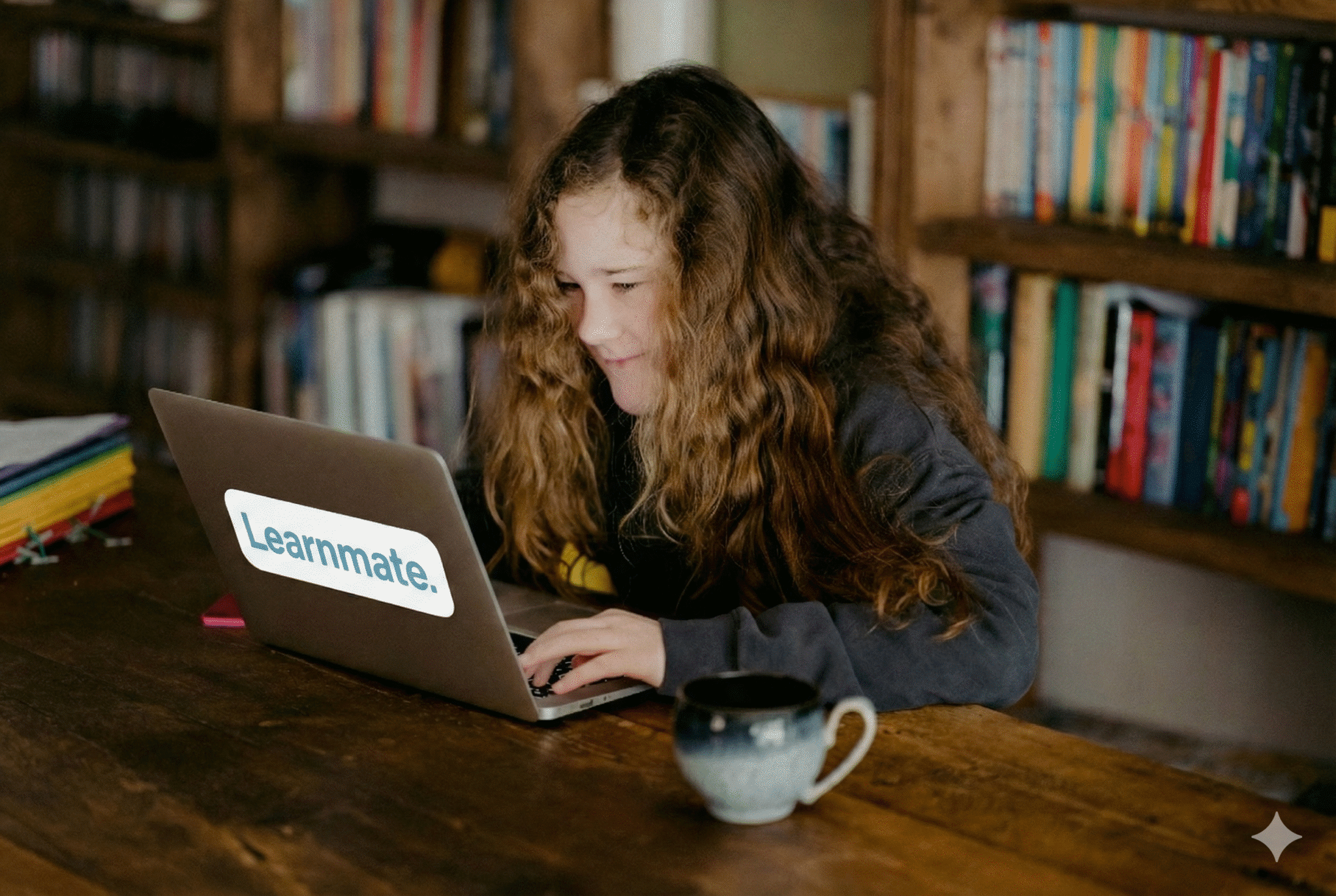
Studying at home has always been a challenge, but in 2026, the distractions and possible excuses are more intense than ever. Between the endless scroll of short-form video, the preference to rank up your favourite game or socialise, new seasons of Stranger Things or something else dropping on streaming, or let's be real... knowing you could easily flick your homework to ChatGPT, fighting the urge to procrastinate is a full-time job.
Without the physical structure of a classroom, it is easy to feel overwhelmed, isolated, or just plain "stuck." So, how do you cut through the digital noise and actually get work done?
Here are proven strategies to help you stay focused, beat burnout, and achieve your best in 2026.
1. Set "Micro" and "Macro" Goals
When you look at a massive to-do list, your brain’s natural reaction is to shut down. The fix is to break it down.
- Micro Goals: Instead of "Study Maths," aim for "Complete 3 practice questions on Calculus." This provides an immediate dopamine hit when you tick it off.
- Macro Goals: Keep your "why" in mind. Are you aiming for a specific ATAR/Study Score? Do you want to get into a specific uni course?
- 2026 Tip: Use digital tools like Notion or Todoist to visualise these goals. Seeing a progress bar fill up can be surprisingly motivating.
2. Manage Stress (Before It Manages You)
In 2026, "student burnout" is a buzzword for a reason. High stress immobilises your ability to focus. If you are feeling paralysed by the workload, it’s not laziness—it’s likely a stress response.
- Complete Micro Goals: Checking items off your to-do list, no matter how small, helps relieve the pressure and weight you might feel sitting on your shoulders. At Learnmate, we are big believers that "Productivity produces positivity." Getting just one small thing done can shift your mindset from panic to control.
- Prioritise Sleep: It is the single biggest performance enhancer for students.
- Digital Detox: High-stress levels often correlate with high screen time. Try disconnecting for one hour before bed.
3. Beat Distraction with the "Forest" Method
Staring at a screen for hours is exhausting. You need a system to force you to take breaks and force you to focus.
- The Technique: Try the Pomodoro Technique—25 minutes of deep work followed by a 5-minute break. For more senior students, try a double pomodoro—50 minutes of deep work followed by a 10-minute break for deeper and more productive study sessions.
- The App: Use an app like Forest. You plant a virtual tree when you start studying; if you pick up your phone to check Instagram or TikTok, your tree dies. It sounds simple, but it’s highly effective for keeping you off your phone.
4. Stick to a Flexible "Block" Schedule
The sudden lack of a school bell can feel disorienting. You don't need a rigid military schedule, but you do need "blocks" of time.
Example Routine:
- 8:00 am: Wake up & Breakfast (No phone allowed yet!)
- 9:00 am – 11:00 am: Deep Work Block (Tackle your hardest subject first when your mind is the freshest).
- 11:00 am – 12:00 pm: Break & Physical movement.
- 12:00 pm – 2:00 pm: Lecture/Notes Block (Reviewing content).
- 2:00 pm: Lunch & specific reward time (e.g., one episode of a show).
- 4:00 pm – 5:30 pm: Homework Block (Finishing daily tasks).
- Evening: Guilt-free relaxation.
At Learnmate, we believe the most effective way to many your routine is to use techniques like the Pomodoro Technique or to work against the clock - if you're working to 1 hour blocks, set yourself a count down on your phone and put it on the top of the desk. It is a reasonably well known and used technique (like in exams) to know you are working "against the clock".
5. Get a "Study Buddy"
Motivation is hard to generate alone. This is where accountability changes the game. Studying with a friend who has similar objectives or study patterns, or connecting with a Learnmate tutor can be the key strategy to keep you on track.
If you connect with a tutor on Learnmate, you can expect:
- Accountability: Knowing you have a session at 5 pm forces you to prepare, preventing procrastination.
- Mentorship: Learnmate tutors are past high achievers who have navigated the exact same exams you are facing. They act as a role model and a coach and can give you insights to overcome learning hurdles quicker and to be even more productive with your time.
- Connection: Online tutoring, which most tutors on Learnmate offer, can combat the isolation of studying at home, giving you a structured social connection focused on your success.
6. Reward Yourself
Discipline requires fuel. If you have nothing to look forward to, your brain will resist the work.
- Small Wins: Finished your English essay draft? Reward yourself with 20 minutes of gaming or a scroll on social media.
- Big Wins: Finished a week of solid study? Go see a movie with friends or enjoy that 18th birthday without the nagging thought of what you didn't get done.
- The Rule: You must do the work to get the reward.
Conclusion
Studying at home requires discipline, but you don't have to rely on willpower alone. By building a routine, using apps to block distractions, and getting the right support network around you, you can turn home study into your competitive advantage.
Ready to boost your motivation? Find a Learnmate today to help you build a study plan that sticks.
FAQs
The best method is to remove the option. Put your phone in another room, on airplane mode or use an app like Forest or Freedom to block distracting apps. Headphones with active noise cancelling are also a must-have for blocking out household noise and giving you "study immersion".
A "9-to-5" approach often fails for students. Instead, work in 50 or 90-minute "focus blocks" separated by 10 to 20-minute breaks. This matches your brain's natural "ultradian rhythms" for peak focus.
A tutor provides external accountability. When you study alone, it's easy to skip a session. When you have a scheduled session with a Learnmate, you are committed to showing up. Plus, seeing your own progress during lessons boosts your confidence and internal drive.